Supplement Shelf
Every bottle says number one. Four checks tell you which one means it.
Strain IDs, delivery, prebiotic, trial data. What each one looks like on a real label, and where the biggest claim holds.
Walk the probiotic aisle, or scroll it, and you will be told the same thing a dozen times over. Best. Advanced. Clinically proven. Number one. The claims are legal, they are printed in good faith, and they are almost impossible to compare, because nothing on the front of a bottle is standardized and the part that would actually settle the question is on the back, in six point type.
There is a shortcut, and it comes from someone with an obvious interest in the answer, which is exactly why it is worth reading carefully.
Zain Kassam is a gastroenterologist who has authored more than 200 peer reviewed publications and abstracts, and he is also the chief medical officer of Seed. Hold both facts in your head for the rest of this page. He published the checklist he uses to judge a probiotic, and he calls it the four D's: diversity, delivery, do-gooders, data. It takes about a minute per product. Most products fail on the second one.
What follows is that checklist run in the open, on the product whose advertising currently carries the loudest version of the claim. Everything below is either printed on a label you can photograph, published on a page you can open, or in a paper you can read for free. Where the evidence stops, this page says so.
The four checks, in one screen
- Diversity. How many strains, and are they named down to the strain, not just the species.
- Delivery. What happens between your mouth and your colon, and what the maker did about it.
- Do-gooders. Is there a prebiotic in there to feed what you just swallowed.
- Data. Was the finished product tested in humans, or only its ingredients, somewhere, once.
Framework published by Seed, A GI Physician's Top 4 Tips for Choosing a Quality Probiotic, last updated May 23, 2025.
The line on the label that actually carries the evidence
Here is the part almost nobody knows, and it is the single most useful thing on this page. A bacterium in a supplement has a three part name, and only the third part is attached to any research.
Anatomy of a strain designation
One name, three partsWithin a single species there can be hundreds or thousands of strains, each with its own effects. The code at the end is the thing a study was actually run on.
A short labelLactobacillus acidophilus. Two words. Nothing you can look up.
A full labelBifidobacterium longum SD-BB536-JP. Three parts, and the third is checkable.
Seed's own guide is blunt about why this matters, and the sentence works just as well against them as for them:
Some probiotic companies only disclose the species they use and not the strains, leaving customers without a key piece of information. Seed, A GI Physician's Top 4 Tips for Choosing a Quality Probiotic
So the check is easy to run and takes ten seconds. Turn the bottle over. If the ingredient list gives you two italic words and a number of billions, you have been told the family and the headcount and nothing else. If it gives you a code after each name, you can go and look each one up.
DS-01 lists twenty four of them, with codes, split across four blends. That is not a marketing figure, it is the supplement facts panel, and it is photographed on their own product page.
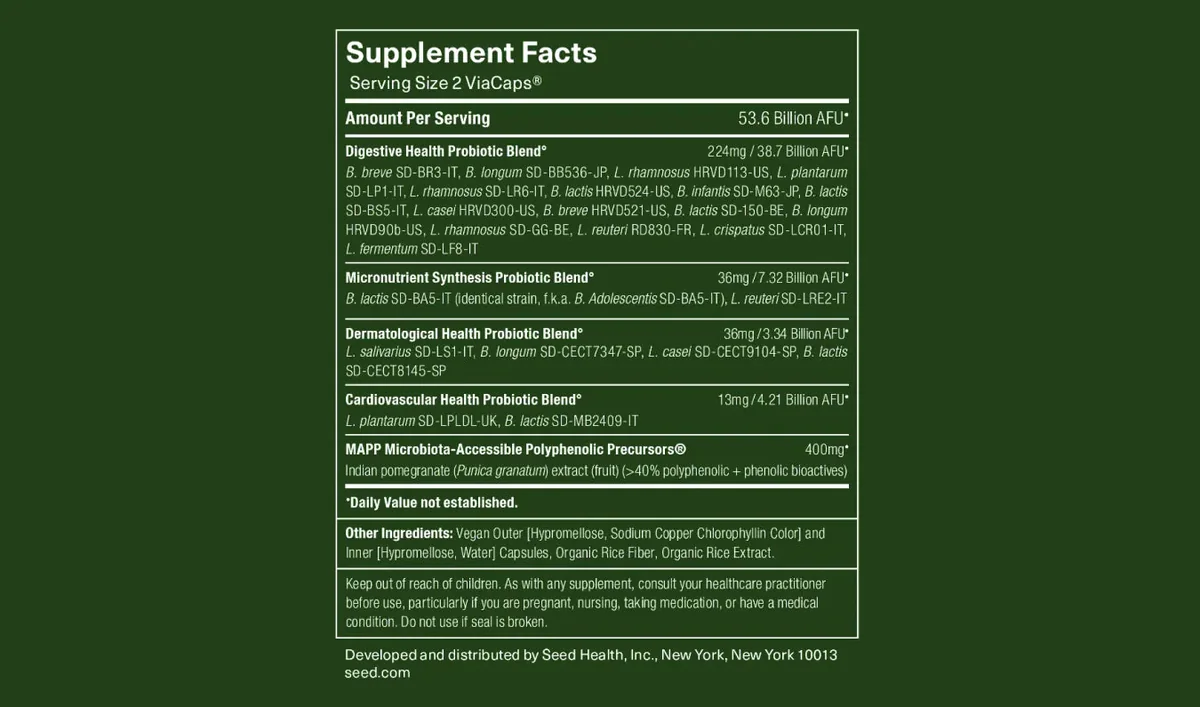
How the 53.6 billion is divided
Four blends, by active fluorescent units per two capsule serving, as printed on the panel above.
Nearly three quarters of the dose sits in the digestive blend. Source: DS-01 supplement facts panel, seed.com/ds-01, read August 14, 2026.
Twenty four is a number, and numbers on their own are cheap. What the count is standing in for is genomic range: Seed puts the figure at 35,000 unique microbial genes across the twenty four, which is a more honest way of describing what diversity buys you than the strain count is.

One more thing on that panel is worth a second look, because it is the kind of detail that separates a formulation from a filling. The unit is not CFU. It is AFU.
CFU
Colony forming units
Counted by plating, a technique in use since the 1800s. Bacteria are grown until colonies are visible, then counted. It misses live microbes that have gone dormant under stress, varies between batches, and struggles with multi strain products because different strains need different growth media.
AFU
Active fluorescent units
Counted by flow cytometry. Cells are tagged with fluorescent markers and read by laser as they pass through a tube. Seed calls it an advanced and more precise method for cell enumeration, and it is what their panel reports.
Definitions and limitations as published by Seed, CFU vs. AFU. Worth knowing when you compare two bottles: a big CFU number and a big AFU number were not produced by the same instrument.
02 DeliveryThe check most products fail, and nobody prints on the front
You can buy a hundred billion of anything. The question is how many arrive.
Probiotic bacteria are alive, which means they are sensitive to heat, oxygen, light and moisture, and on the way down they pass through a stomach whose job is to kill microorganisms. Seed's own guide gives the number, and cites it:
Some research shows that just 20 to 40% of probiotic bacteria survive the journey, depending on the strain, delivery method, etc. Seed, citing Bezkorovainy, American Journal of Clinical Nutrition, 2001
Read that again with a shopping eye. At the good end of that range, six capsules in ten do not arrive. At the bad end, eight. Which is why the interesting engineering in this category is not the strain list at all. It is the shell.
Ten swallowed, two to four arrive
Range as published by Seed, citing Bezkorovainy, American Journal of Clinical Nutrition, 2001. It is a range across strains and delivery methods, not a figure for any one product.
Where a capsule has to hold
Sealed on the way downThe outer capsule is the barrier against acid, oxygen, heat and moisture.
Opens after the stomachIt begins to dissolve once it is through, releasing the prebiotic.
Inner capsule arrivesThe bacteria are carried on to the target site, where most of the gut microbiota live.
Sequence as described by Seed on seed.com/ds-01 and in their GI physician guide. Not to scale, and not a claim about timing.
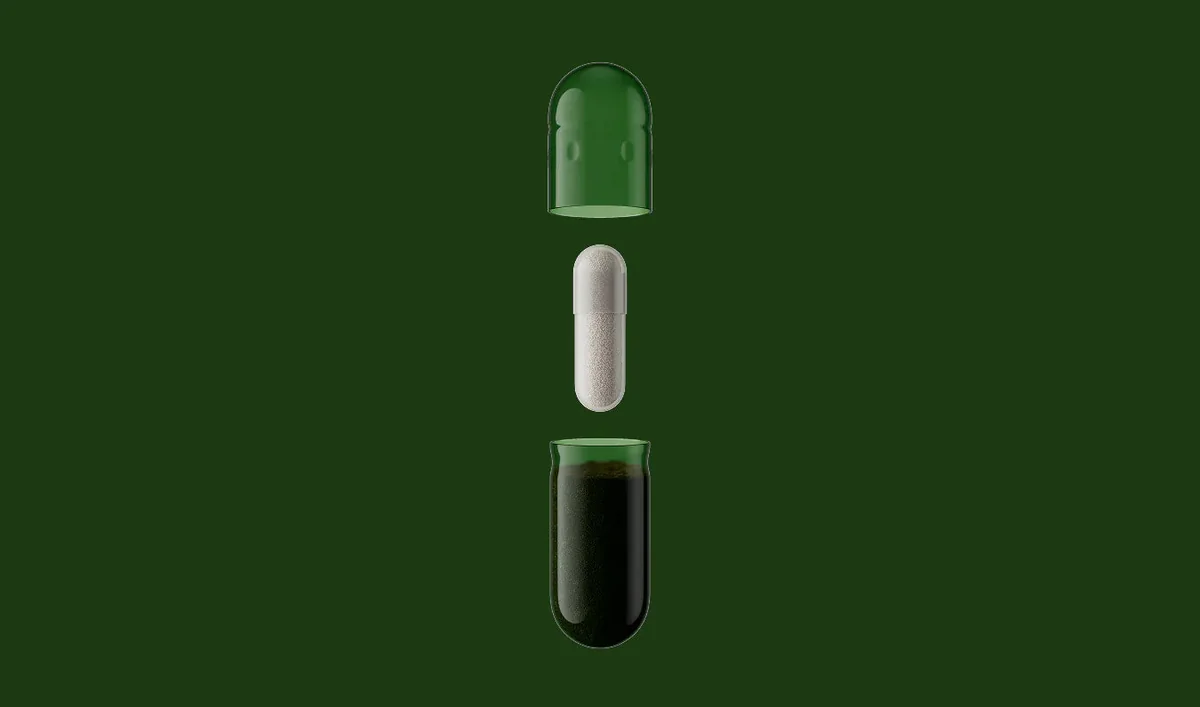
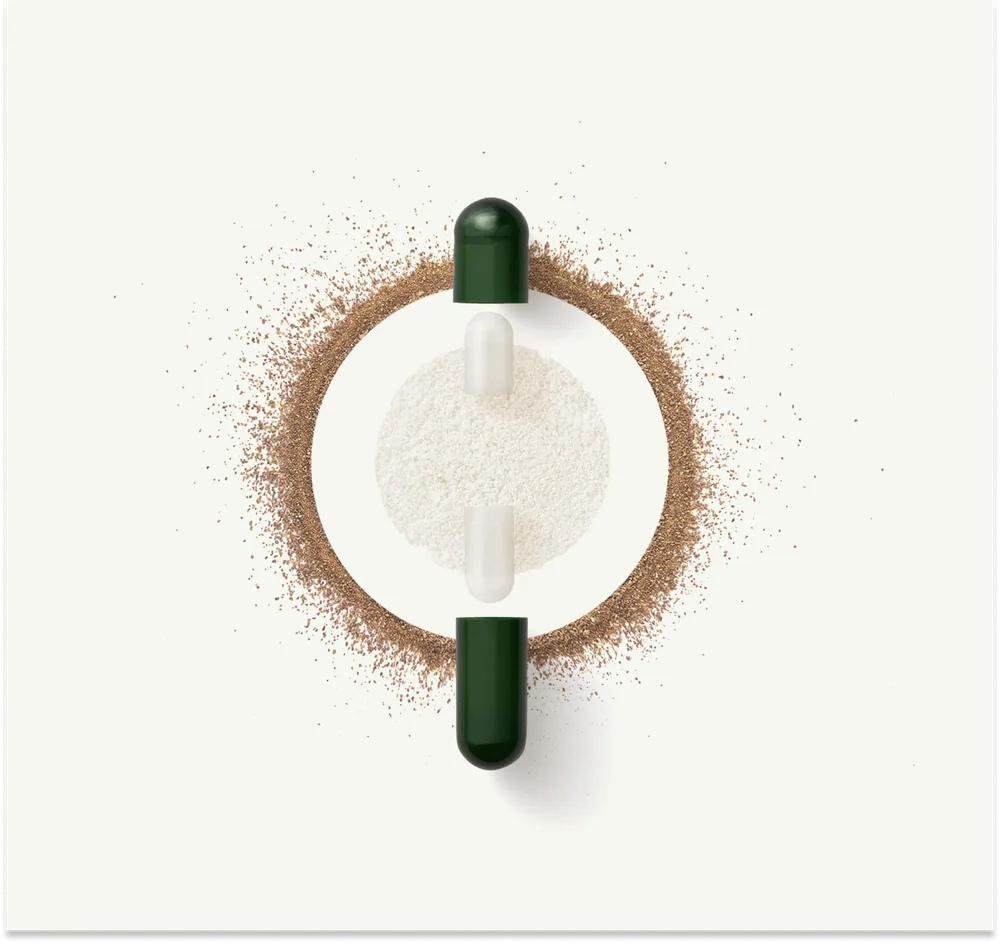
That is what the picture at the top of this page is showing you. Two shells, nested, doing two different jobs. Seed calls the system the ViaCap, the panel calls a serving two ViaCaps, and the other ingredients line names both shells separately: a vegan outer capsule and an inner one.
Where this check stops, and it matters
Seed reports testing the ViaCap in a laboratory model that simulates the compartments of the GI tract, called SHIME, and says it withstood stomach conditions. That is a simulation, not a survival percentage measured in people, and no such percentage for DS-01 appears anywhere on their public pages.
So the honest reading is this. The design directly addresses the failure mode, and the design is visible in your hand when you take the capsule apart. The size of the improvement is not published. Anyone who tells you otherwise is filling in a blank.
What feeds them once they get there
A probiotic without a prebiotic is, in Kassam's phrase, a bit like using a phone without a charger. The bacteria arrive and then have to eat something. Prebiotics are the non living substrates that let them grow, and while they digest those substrates they produce secondary compounds of their own.
Most prebiotics on the market are fibers. The one on the DS-01 panel is not, and Seed labels theirs a no bloat prebiotic, which tells you plainly what the usual sort is understood to do. You can read the line yourself on the label two screens up:
The prebiotic, as printed
One line on the supplement facts panel, worth decoding.
MAPP Microbiota-Accessible Polyphenolic Precursors, 400 mg.
Indian pomegranate (Punica granatum) extract, fruit, greater than 40% polyphenolic and phenolic bioactives.
- It is not a fiber. Seed describes it as a non fiber prebiotic, which is the whole point of the choice.
- 400 mg is a disclosed amount, not a proprietary blend hiding behind a total.
- It is the same 400 mg that went into the clinical trial in the next section, which is unusual and is the reason that trial means anything about the product you would buy.
Source: DS-01 supplement facts panel and Seed's GI physician guide, which names Indian pomegranate as the source.
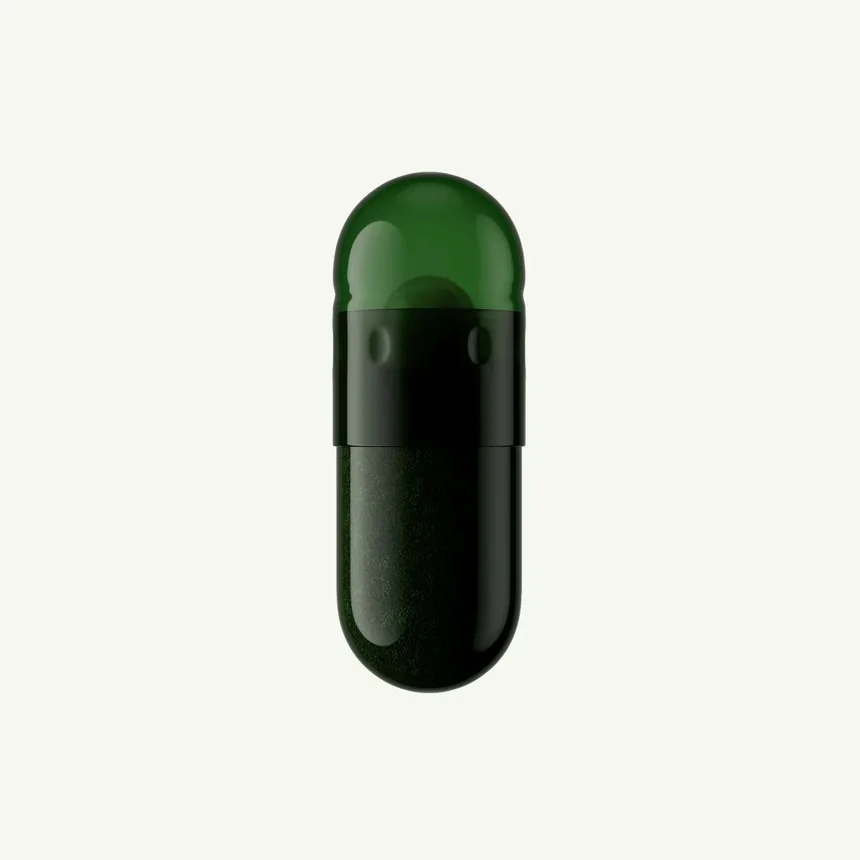
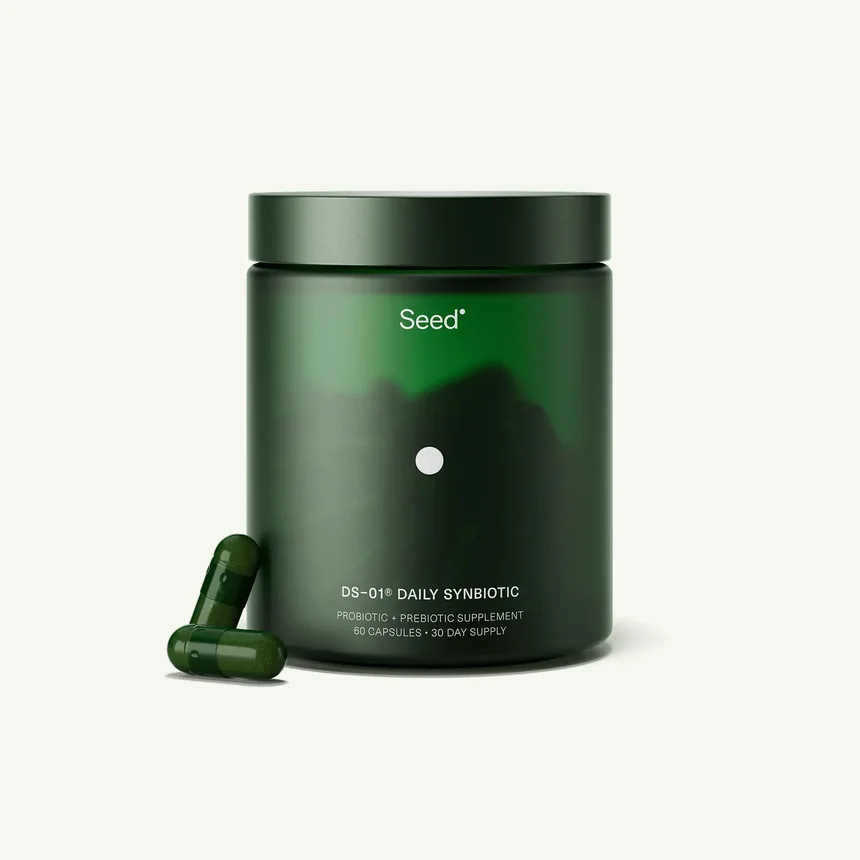
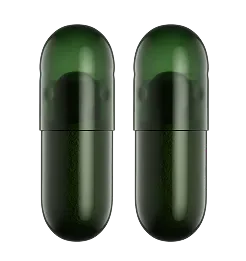
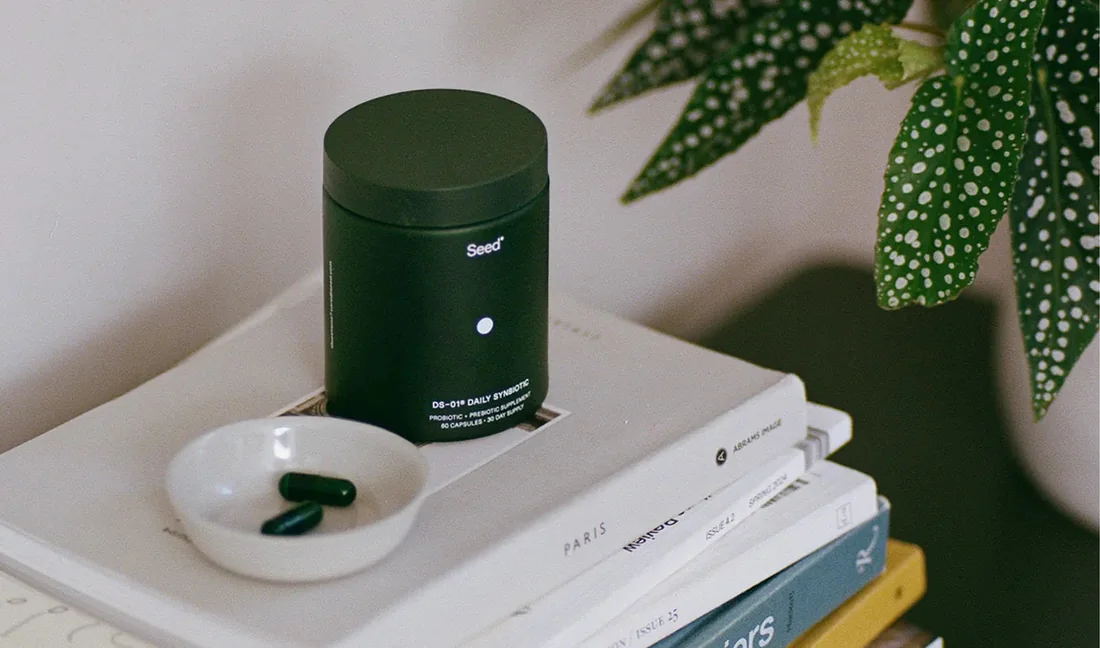
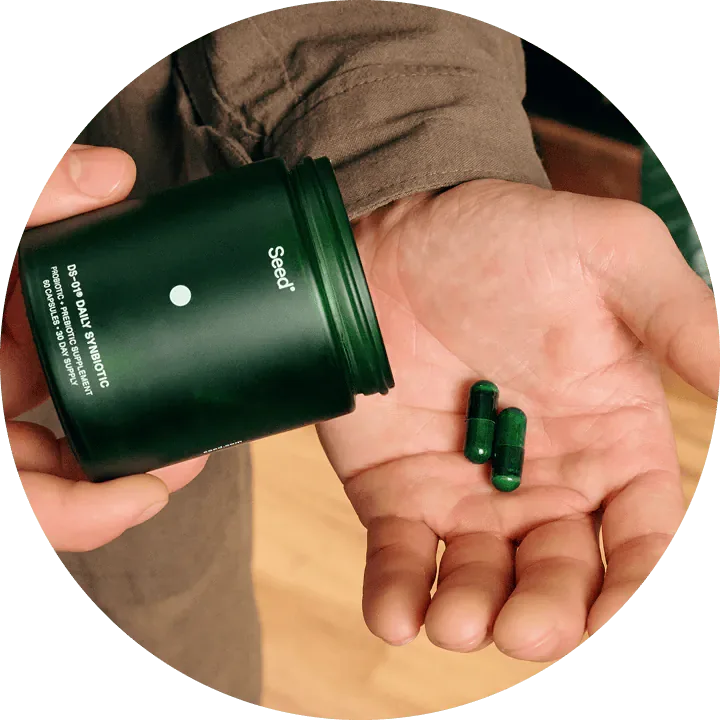
Dosing, jar contents and storage as published on seed.com/ds-01. Images: seed.com
04 DataThe check that almost nothing passes
Supplements do not have to be tested in humans before they go on sale. That is not a scandal, it is the law, and it is why the category moves quickly. It is also why the fourth check separates products more sharply than the other three combined.
Left figure published by Seed in their GI physician guide. Centre and right from Allegretti et al., Nutrients 2026, 18(2), 255, open access.
Most probiotic companies don't do clinical trials and they very rarely interrogate the deep biology of why a probiotic works. Zain Kassam, M.D., M.P.H., gastroenterologist and Seed's chief medical officer
There is a second trap inside this check, and it catches careful shoppers. A company can point at studies conducted on the individual strains in its product rather than on the product. Those studies may have been run in animals or in cell cultures, and ingredients that work alone do not necessarily do the same thing combined. The question is not whether a strain has been studied. It is whether the finished formula has.
What the trial actually did
In January 2026, Nutrients published a randomized, double blind, placebo controlled, decentralized trial of the finished DS-01 formula: 53.6 billion AFU plus 400 mg of pomegranate extract, taken daily for six weeks by 350 adults with self reported bloating or indigestion. The lead author is Jessica R. Allegretti of Brigham and Women's Hospital and Harvard Medical School. Co-authors sit at Mount Sinai, UCSF, Yale and Seed itself.
Results at week six, synbiotic versus placebo
Reported outcomes as published in the abstract. Lower scores are better on the three symptom scales.
p < 0.001
- GI quality of life improved against placebo, 0.80 versus 1.20 (p < 0.05).
- Bloating and gas score fell, 16.0 versus 21.0 (p < 0.01).
- Abdominal discomfort fell, 8.0 versus 10.0 (p < 0.01).
- Constipation and regularity improved significantly against placebo.
Allegretti J.R., Kassam Z., Kelly C.R., Grinspan A., El-Nachef N., Van Den Elzen C., Jäger R., Feuerstadt P. A Randomized, Placebo-Controlled Trial Evaluating Multi-Species Synbiotic Supplementation for Bloating, Gas, and Abdominal Discomfort. Nutrients 2026, 18(2), 255. Published January 14, 2026. Registered as NCT06009614.
Who paid, and why you should still read it
The paper says so itself, in the section most people skip. The study was funded by a grant from Seed Health. Two of the eight authors are employees and shareholders of Seed, and two more serve as advisors. That is a real conflict and it belongs in your reading of the numbers.
The paper also states that trial operations were run independently by a contract research organization, Radicle Science, that the sponsor had no role in those operations, that the study was approved by an institutional review board and prospectively registered on clinicaltrials.gov before it began, and that the final decision to publish sat with the authors.
Prospective registration is the part that matters most, because it is what stops a study from quietly changing its main question after the results come in. The paper is open access. You do not have to take anyone's summary of it, including this one.
Where the claim stops
A page that only stacks up evidence is a brochure. Here is the rest of it, and none of it is hidden. All of it comes from Seed's own pages.
- It is a supplement, not a medicine. Their own footer carries the standard line: these statements have not been evaluated by the Food and Drug Administration, and the product is not intended to diagnose, treat, cure or prevent any disease.
- Nothing here is instant. Seed's own timeline says effects in the digestive tract can turn up in 24 to 48 hours, bloating and gas around 7 days, regularity around 2 weeks, and whole body claims later than that. Reviews on their own page mention three weeks before anything shifted.
- It is a subscription. $49.99 a month for a 30 day supply, delivered monthly, and their answer to whether you can buy it any other way is a straight no. You can pause or cancel from your account, and the 30 day risk free refund applies to the first order only.
- Some people should ask first. The label says to consult your healthcare practitioner before use, particularly if you take medication or have a medical condition.
- The ranking itself is a claim, not a finding. It carries a footnote marker in Seed's own creative. Nothing on this page rests on it, which is rather the point: the four checks above do not need a leaderboard.
15,086 reviews, and the shape of them
An average is a poor summary of a review page. The distribution is better, because it shows you how many people were actively unhappy, and that is the number most brands would rather you did not add up.
DS-01 rating distribution
4.8 out of 5, based on 15,086 reviews published on seed.com, read August 14, 2026.
559 people, roughly one in twenty seven, gave it three stars or fewer. Reading a handful of those is a better use of five minutes than reading fifty of the five star ones.
Four reviews from their public page, chosen because they are specific rather than enthusiastic. Two of them are lukewarm, which is why they are here.
Best probiotic on the market! You can actually feel it working. At first, you may experience some bloating and cramping, but that's your gut getting used to the bacteria strains actually penetrating through the stomach acid and into your small intestine. Within a couple of weeks, I became more regular and less bloated and feeling better energy and mood.
Christopher T., April 21, 2026 Verified
Took about 3 weeks for my body to get used to it but I have less bloating and regularity.
Cheryl, March 6, 2026 Verified
Been taking Seed probiotics, super easy to knock out in the morning. I'm 34 and just started my second month. Feeling good so far, nothing crazy but definitely positive. Curious to see how it pays off long term.
Rey E., March 23, 2026 Verified
I have been skeptical of probiotic supplements in the past, but my view has been totally changed by my experience with the Daily Synbiotic. I really appreciate how science backed their approaches to their products.
Marie L., February 3, 2026 Verified
All four are published publicly on seed.com/ds-01 and belong to their authors. Individual experiences vary and are not evidence of a typical result.
Four checks, one product, and where to see each answer
| Check | What passes | What DS-01 shows, and where you can see it |
|---|---|---|
| Diversity | Strains named down to the designation, not just the species | 24 strains, each with its code, across four blends. Visible on the supplement facts panel on their product page. |
| Delivery | Something specific done about the stomach, not a promise | A capsule inside a capsule. Both shells are named separately in the other ingredients line. Survival tested in a laboratory GI model. No human survival percentage is published. |
| Do-gooders | A prebiotic, in a disclosed amount | 400 mg of Indian pomegranate extract, non fiber, printed with its botanical name and its bioactive content. |
| Data | The finished product tested in humans, published, registered | 350 adults, six weeks, randomized and placebo controlled, in Nutrients, January 2026. Registered before it started. Funded by Seed, with the conflict declared in the paper. |
Run the same four rows against whatever is currently in your cupboard. The exercise takes about a minute and it is uncomfortable.
- 24 strains, 53.6 billion AFU per two capsule serving
- 400 mg non fiber prebiotic from Indian pomegranate
- ViaCap two shell delivery, no refrigeration required
- Tested as a finished formula in randomized, placebo controlled trials
- 30 day risk free guarantee on your first order
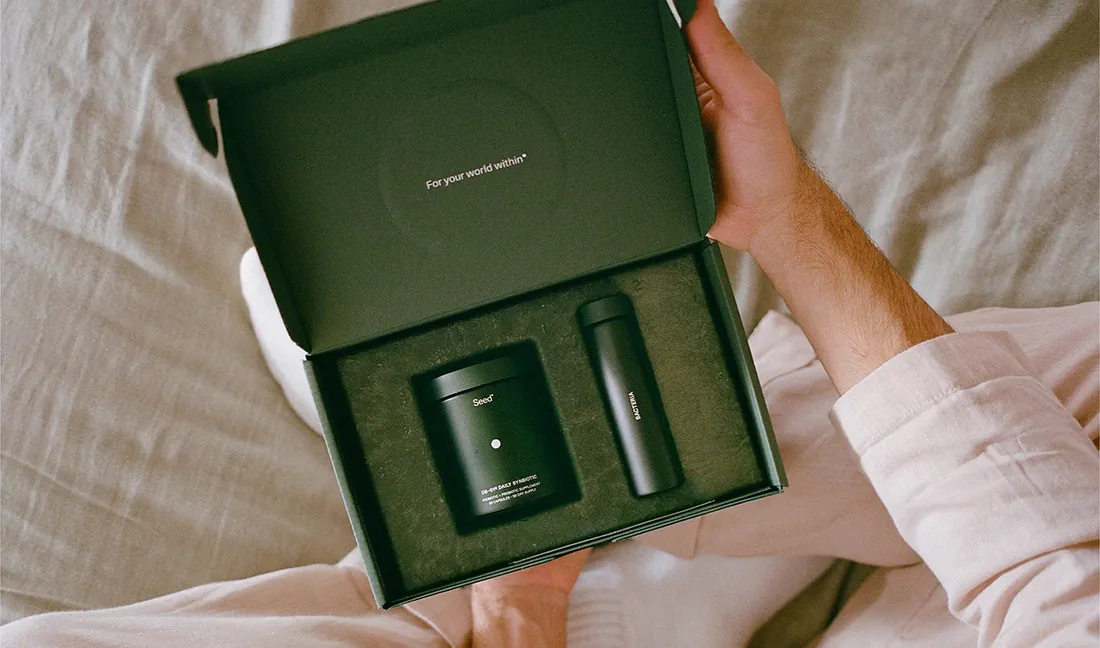
Four questions people ask at this point
Does a bigger number of billions mean a better probiotic?
Not on its own, and not comparably. The count only tells you what went into the capsule, not what came out the other end, and a CFU figure and an AFU figure were not produced by the same instrument. Diversity, delivery and evidence do more work than the headline number.
Do I need to keep it in the fridge?
Seed says no refrigeration is necessary for DS-01. That is a formulation and packaging property, not a universal one, so check it product by product.
When would I know whether it is doing anything?
Their published timeline puts bloating and gas around 7 days and regularity around 2 weeks, with whole body claims later. Their own review page has people saying three weeks. If you are the kind of person who wants a verdict in 48 hours, this is not that category.
Is the number one claim true?
It is a marketing claim with a footnote, like every other number one on the shelf, and this page deliberately does not lean on it. What can be checked has been checked above: the strain designations are printed, the delivery system is a physical object you can pull apart, the prebiotic is disclosed by weight, and the finished formula has been through a registered, published, placebo controlled trial. Very few products in this aisle clear all four. That is a more useful sentence than a ranking.